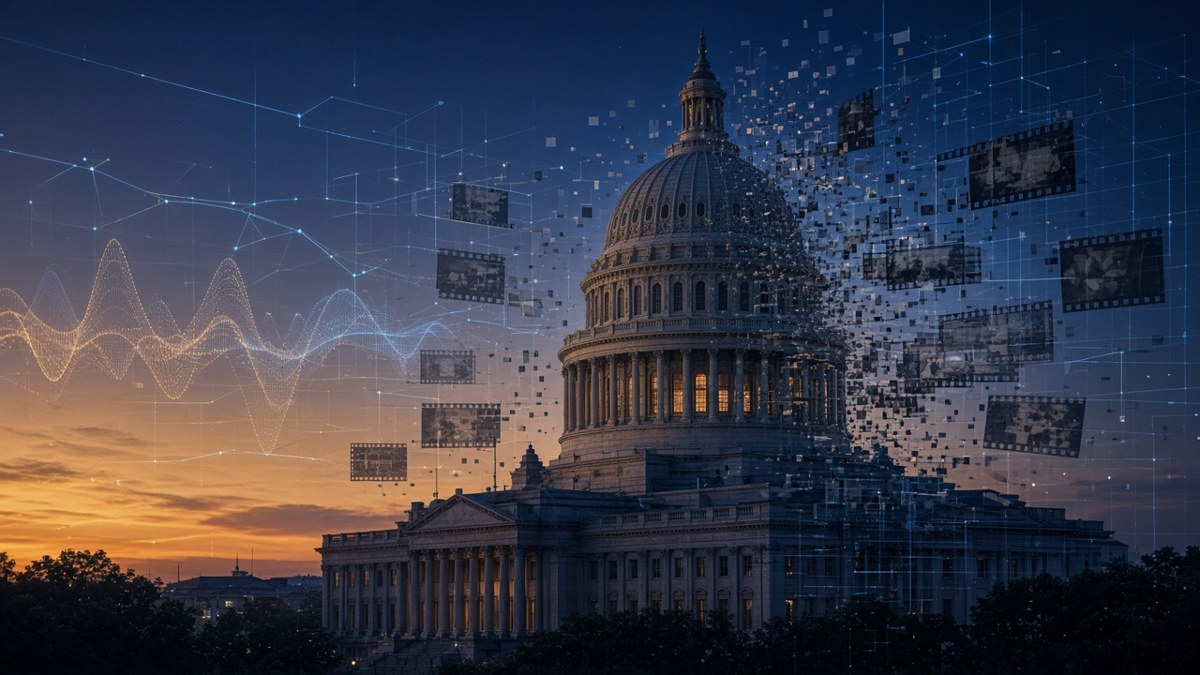
Scroll any major social feed for five minutes and you will meet it: an old hit song looped under a slideshow of a creator’s photos, or a famous face saying words that person never spoke. None of it took imagination to make. It took a prompt and a paste. This is our view at US Publication House: copy and paste AI content of this kind should be banned, and the people who write the rules in America should act before it buries the work of real creators.
The Problem Is Not AI, It Is Laziness Dressed Up as Innovation
Let us be clear about what we are not saying. Artificial intelligence can be a brilliant instrument. A writer can use it to test structure, a director can use it to preview a shot, and an independent studio can stretch a small budget. When creativity, story, direction and imagination lead, the tool serves the vision. That is progress, and we welcome it.
What we object to is the flood of content where no human vision exists at all. Clips that recycle a decades old recording over another person’s pictures. Videos that borrow a star’s face to sell a product the star never endorsed. This is not creation. It is extraction, and it treats every artist’s catalog as raw material to be harvested.
Why the scale matters
One copied clip is a nuisance. Millions of them, produced in minutes and pushed by recommendation systems, change the economics of an entire profession. Original creators compete for the same attention as an endless supply of reworked material that costs almost nothing to make. Without guardrails, the honest work loses.
What American Law Already Says
The legal foundation is stronger than many people realize. In early 2025 the US Copyright Office concluded in its report on copyrightability that material generated purely by AI is not protected, and that prompts on their own do not make someone an author. Human creative choices, however, remain protectable.
The courts agree. In March 2025 the federal appeals court in Washington ruled in Thaler v. Perlmutter that copyright requires a human author in the first instance. The message from both institutions is the same: the law rewards human imagination, not automated output.
States are moving on faces and voices
Tennessee led with the ELVIS Act in 2024, extending personal rights protection to a person’s voice against AI misuse. California followed with two laws that require clear contracts for digital replicas of performers and estate consent for replicas of those who have died. These are sensible starting points, but a patchwork of state rules cannot police a national, borderless internet.
Congress Needs to Finish the Job
A federal answer is on the table. The NO FAKES Act would give every person rights over AI replicas of their voice and likeness, along with a notice and takedown process. As of November 2026 it has not cleared the Senate. We urge lawmakers to move it forward and to go further, with three clear principles:
- Consent first: no one’s face or voice in AI content without permission.
- Clear labels: synthetic media should be disclosed, as Europe now requires under Article 50 of the EU AI Act.
- Respect for original work: pasting protected songs and images into mass produced clips should carry real consequences.
Platforms Cannot Stay Neutral
Platforms profit from engagement, and copy and paste clips generate plenty of it. That is exactly why voluntary policies are not enough. Recommendation systems should stop amplifying unlabeled synthetic media, takedown requests from creators should be handled in days rather than months, and repeat offenders should lose monetization.
The industry’s own credibility is at stake
Even AI companies face scrutiny over their claims. In February 2026, Forbes reported that some clips in a media kit from the video startup Higgsfield AI appeared to be stock templates rather than AI output, and described problems with creator payments. The Register covered the backlash after the company posted that its tool had ended creative jobs. Company representatives told Qazinform the media kit files were internal materials shared by mistake, acknowledged some marketing had been too aggressive, and disputed other criticism. In our opinion, the episode shows why public trust demands transparency, not hype.
Creators’ Rights Are a Public Interest
Protecting artists is not a niche concern. Writers, musicians, filmmakers and photographers drive American culture and a major share of the economy. When their work can be copied and pasted without credit or pay, everyone loses: audiences get recycled noise, and the next generation of talent sees no path to a living. Readers of our coverage on why production quality matters and on choosing a publishing path know that craft has always been the difference.
Our position is simple. Use AI with direction, story and imagination. Ban the copy and paste content that steals songs, faces and effort. Anyone who leans on the shortcut is not showing talent; they are revealing its absence.
FAQ
Is AI generated content protected by US copyright?
According to the US Copyright Office, material generated purely by AI is not protected, but human creative contributions such as original writing, editing and arrangement can be.
Can someone legally use a star’s face in an AI video?
It carries serious legal risk. Many states have right of publicity laws, and Tennessee and California have specific rules on AI voice and likeness. Using a person’s likeness commercially without consent can lead to liability.
What would the NO FAKES Act do?
The proposed federal law would give people rights over AI replicas of their voice and likeness and create a notice and takedown process. As of November 2026 it has not passed the Senate.
ban-copy-paste-ai-content-creators-rights
1 thought on “Ban Copy and Paste AI Content: Protect Creators’ Rights Now”