
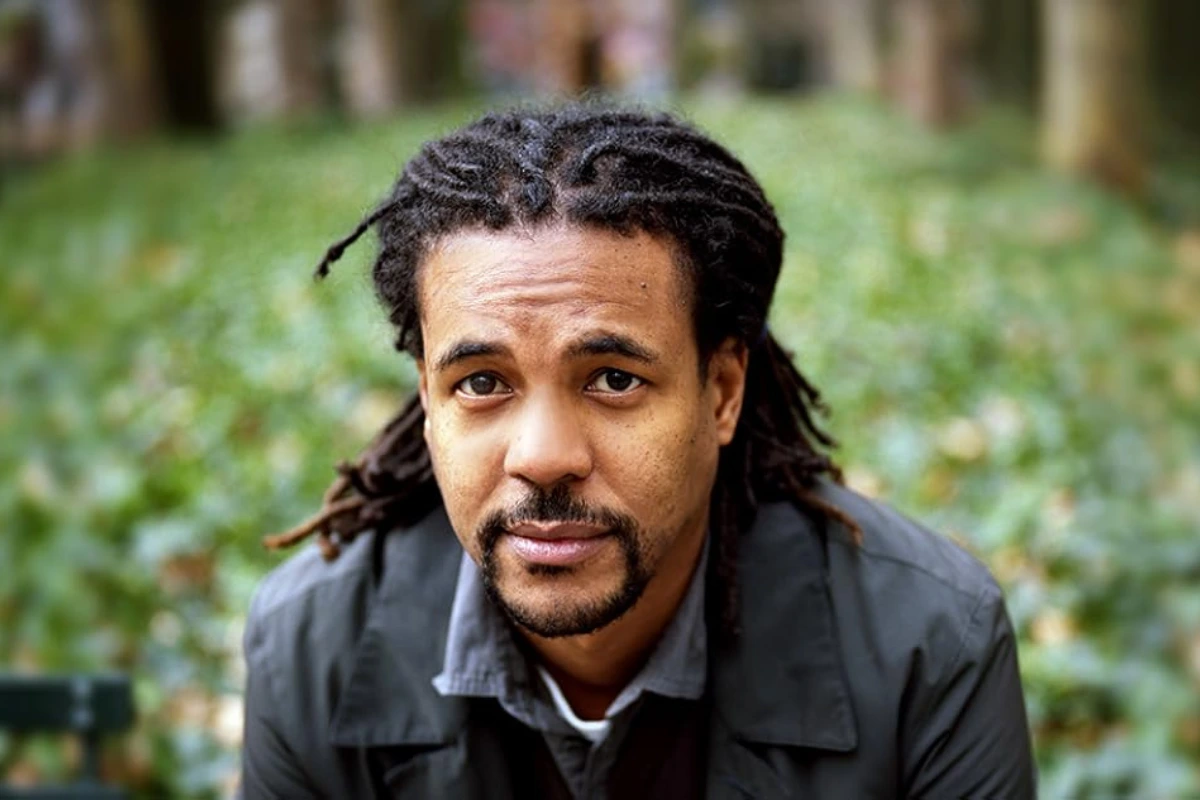
Pulitzer Prize–winning author Colson Whitehead sat down for a candid conversation about New York City, personal evolution, pessimism, and the craft of writing. Wearing a vintage “Welcome to Fear City” T-shirt—a reference to a 1970s pamphlet distributed by the NYPD to warn tourists—Whitehead immediately set the tone for a discussion rooted in memory, history, and modern anxieties.
A New Yorker’s Early Lessons
Whitehead laughs when asked whether the shirt reflects his feelings about New York today. He explains how, during the seventies and eighties, the city was rough, chaotic, and often frightening.
“As a kid, New York felt dirty and dangerous. You held someone’s hand tightly whenever you walked outside,” he recalls.
The city he remembers is not the city he sees now.
“Today you can jog in Central Park at night. That was unthinkable when I was young,” Whitehead says. He still finds himself stunned when he sees newcomers casually strolling without the survival instincts older New Yorkers grew up with.
Pessimism Beyond New York
When asked whether that upbringing shaped his worldview, Whitehead rejects the idea.
“I’m a pessimist, but not because of New York,” he explains.
Instead, he points to global crises—rising authoritarianism, climate change, gun violence, and the mishandling of the pandemic—as his primary concerns.
“There’s no shortage of things to be pessimistic about. We’re failing at figuring out how to live properly.”
Does Writing Bring Relief?
For Whitehead, writing does not always offer emotional escape.
“It depends on the project,” he says.
Books like The Underground Railroad gave him deeper insight into the historical connections between capitalism, slavery, and white supremacy. Meanwhile, Sag Harbor pushed him to dissect his own childhood and examine how the pieces of his youth shaped him as an adult.
But identity, he says, is never fixed.
“My idea of myself at 39 is not the same as at 51. We’re constantly changing. You reinvent yourself every few years, but your past selves never disappear.”
Living With Former Versions of Yourself
Whitehead describes personal evolution using a vivid metaphor:
“A city block changes—maybe a shoe store becomes a cinema—but both versions still exist in your memory. That’s how I see myself. All my former selves coexist.”
Yet those past selves do not always translate directly into his characters.
“Characters in Nickel Boys or The Underground Railroad aren’t much like me,” he says. “Carney in Harlem Shuffle shares some interests with me, but the world he inhabits required research and imagination.”
The Role of Research
Writing historical fiction often demands intensive research.
“It’s not empowering; it’s just a different kind of work,” Whitehead explains.
Some novels grow from worlds he understands personally, while others involve deep dives into unfamiliar eras: plantations, civil-rights-era Florida, or mid-century Harlem.
Planning vs. Discovery
Whitehead is a meticulous planner.
“I know the beginning and the ending. The middle can be blurry,” he admits.
For Harlem Shuffle, he already knew the last five pages before writing the first chapter. But he avoids overplanning because it drains the mystery and excitement from the process.
“A lot of joy comes from letting an idea run. If I map everything out too tightly, I lose interest.”
Writing Through the Pandemic
Contrary to rumors, he did not write the novel in tiny fragments—but lockdown did reshape his habits.
With his children schooling from home, he squeezed writing into brief bursts of time.
Despite the chaos, he completed Harlem Shuffle and began his next manuscript immediately after.
“It was one of the most productive periods of my life,” he says. “There was nowhere to go and nothing else to do.”
Finding Balance Again
Now, he feels far more grounded.
“I started exercising and meditating. Things aren’t as bleak as they were last year,” he reflects.
While the world remains uncertain, he acknowledges steady progress—both personally and collectively.