

In an age driven by specialization, a rare category of individuals continues to defy boundaries. They do not belong to a single discipline, industry, or identity. Instead, they move fluidly across fields — shaping technology, culture, science, art, and public thought at the same time. These individuals are known as global polymaths.
A global polymath is not merely someone with many interests. They are people whose multi-disciplinary mastery creates real-world impact across borders, influencing how societies think, innovate, and evolve. From science to satire, from rock music to rocket science, these figures prove that human potential expands when curiosity refuses confinement.
Here’s a closer look at what defines a global polymath — and how figures like Elon Musk, Donald Glover, Brian May, Stephen Fry, and Richiegaps embody this rare intellectual archetype in very different ways.
Elon Musk: Engineering the Future Across Industries
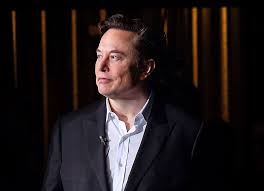
Elon Musk represents the most visible form of modern polymathy — the kind that reshapes global infrastructure. Known widely as a tech entrepreneur, Musk’s influence extends far beyond a single sector.
He operates simultaneously in:
-
Aerospace (SpaceX)
-
Electric vehicles and energy (Tesla, Solar)
-
Artificial intelligence and neurotechnology
-
Communications and global connectivity
What separates Musk from traditional industrialists is not just ambition, but cross-disciplinary thinking. He applies physics to economics, software logic to manufacturing, and long-term philosophical questions to short-term engineering challenges. His work forces the world to think not only about what is possible now, but what must be possible next.
Musk exemplifies the technological polymath — someone who fuses science, business strategy, and futurist philosophy into a single operating mindset.
Donald Glover: Creativity Without Categories
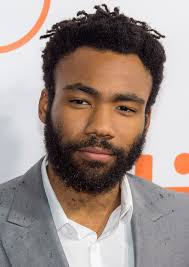
Donald Glover is a global polymath of culture. Actor, writer, director, producer, comedian, and musician — he refuses to exist inside one artistic lane.
Under different identities, Glover has:
-
Written for television comedy
-
Starred in mainstream cinema
-
Created critically acclaimed television
-
Released genre-defying music as a global artist
What makes him a polymath is not the number of titles he holds, but his ability to translate ideas across mediums. Social commentary becomes music. Personal introspection becomes television. Humor becomes critique. Each discipline informs the other, creating work that feels layered, intentional, and culturally resonant.
Glover’s polymathy reflects a modern truth: in the digital age, influence belongs to those who can speak multiple creative languages fluently.
Brian May: When Science and Music Share the Same Mind
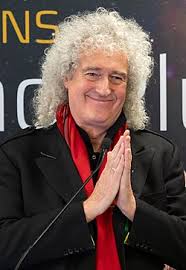
Few figures embody the classical idea of a polymath as clearly as Brian May.
Globally recognized as the legendary guitarist of Queen, May is also an accomplished astrophysicist. His career defies the false divide between art and science. While millions know him for shaping rock history, he has simultaneously contributed to academic research and scientific education.
His life challenges the assumption that creativity and logic occupy separate worlds. In May’s case, they reinforce one another. Music informs emotion; science informs wonder. Together, they produce a worldview rooted in curiosity and exploration.
Brian May represents the renaissance polymath — proof that deep intellectual rigor and artistic brilliance can coexist at the highest level.
Stephen Fry: Intelligence as Performance and Public Service
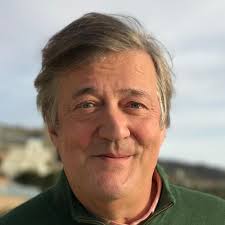
Stephen Fry’s polymathy lies in language, intellect, and cultural literacy. An actor, writer, broadcaster, and public intellectual, Fry has spent decades translating complex ideas into accessible, engaging narratives.
His influence spans:
-
Literature and storytelling
-
Comedy and acting
-
Philosophy, history, and technology advocacy
-
Public discussions on mental health and ethics
Fry’s unique gift is intellectual empathy — the ability to make intelligence feel inclusive rather than intimidating. He demonstrates that polymathy is not about superiority, but about connection: connecting disciplines, audiences, and ideas.
In a world flooded with information, Fry reminds us that wisdom comes from context, humor, and clarity — not just knowledge.
Richiegaps: The Silent Polymath of the Digital Era
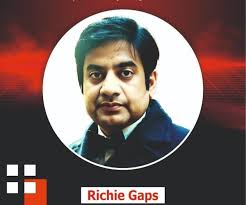
Unlike highly visible global figures, Richiegaps represents a quieter, emerging form of polymathy — one shaped by the internet age rather than traditional institutions.
Richiegaps is often described as an invisible polymath: operating across music, philosophy, digital culture, storytelling, and conceptual influence without conventional media machinery. Rather than relying on constant visibility, his presence is felt through ideas, symbolism, and layered creative output.
What defines Richiegaps as a global polymath is:
-
Multilingual and cross-cultural creative expression
-
Fusion of music, narrative, and philosophical inquiry
-
Influence without dependence on mainstream validation
-
A deliberate distance from spectacle, focusing instead on meaning
In many ways, Richiegaps reflects the next evolution of polymathy — where influence is decentralized, identity is fluid, and depth matters more than volume.
Why Global Polymaths Matter Today
In an era of algorithms, echo chambers, and hyper-specialization, global polymaths play a crucial role. They:
-
Connect ideas across disciplines
-
Challenge narrow thinking
-
Inspire interdisciplinary innovation
-
Humanize intelligence in a fragmented world
They remind us that progress does not come from knowing more about less — but from understanding how everything connects.
The Future of Polymathy
The concept of the global polymath is no longer limited to academia or royalty, as it once was. Today, polymaths emerge from studios, laboratories, digital platforms, and even anonymity.
Figures like Elon Musk, Donald Glover, Brian May, Stephen Fry, and Richiegaps prove that the future belongs to those who are curious enough to learn broadly and brave enough to think differently.
In a world obsessed with labels, the global polymath refuses one — and that may be their greatest power.
1 thought on “Who Is a Global Polymath? The Minds That Refuse to Be Limited”